

Horst Fire Pit

Proposal for a canopy over the fire pit of legendary Horst Festival, Vilvoorde, Belgium
Competition, 2025, gloriously failed
with Tim Langerbeins
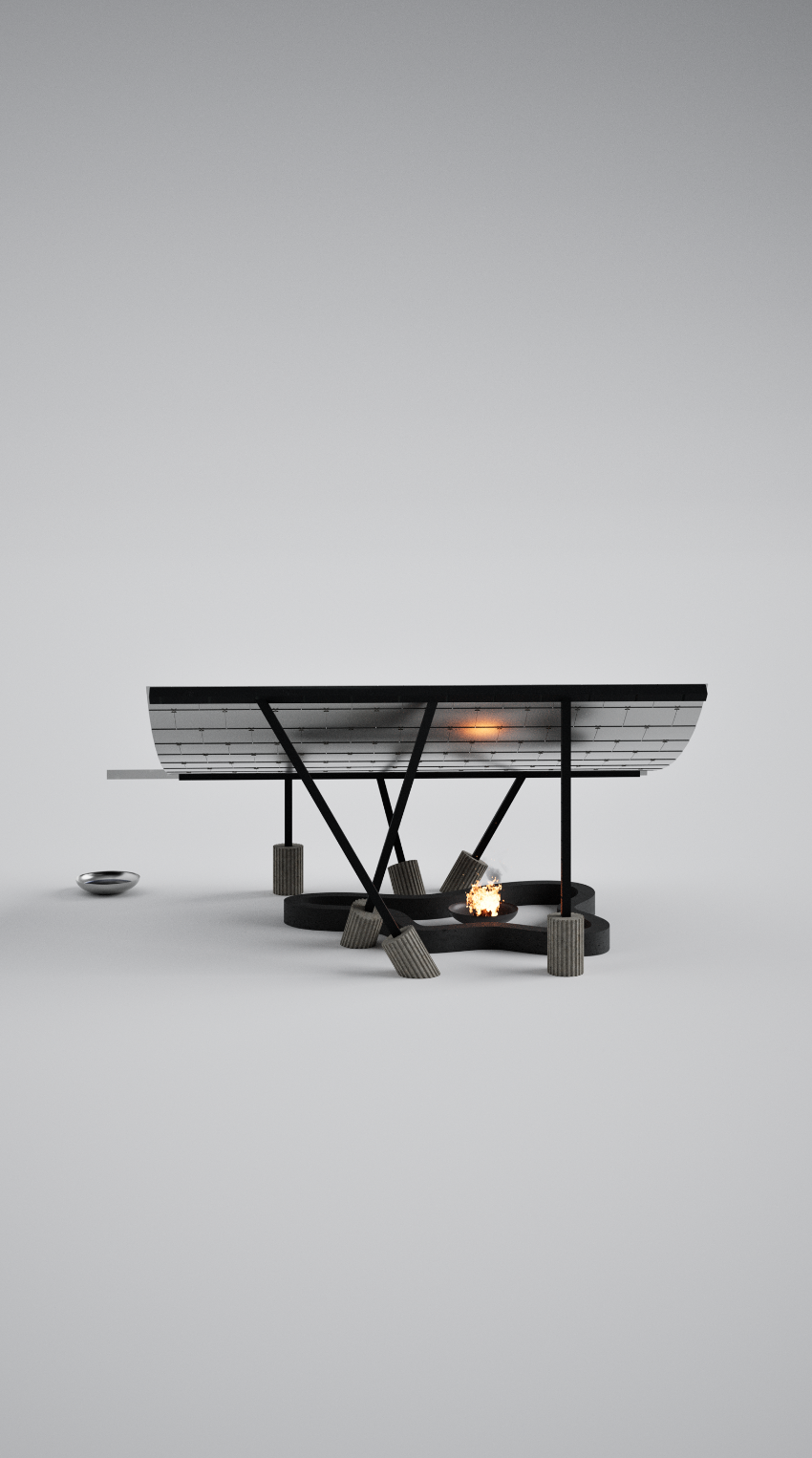
The roof structure is conceived as a place of gathering around fire, where elemental phenomena – fire, water, reflection, and smoke – are brought into a temporary but intense spatial relationship. Rather than introducing a closed object, the project establishes a lightweight structure that frames an evening ritual and gives presence to its ending.
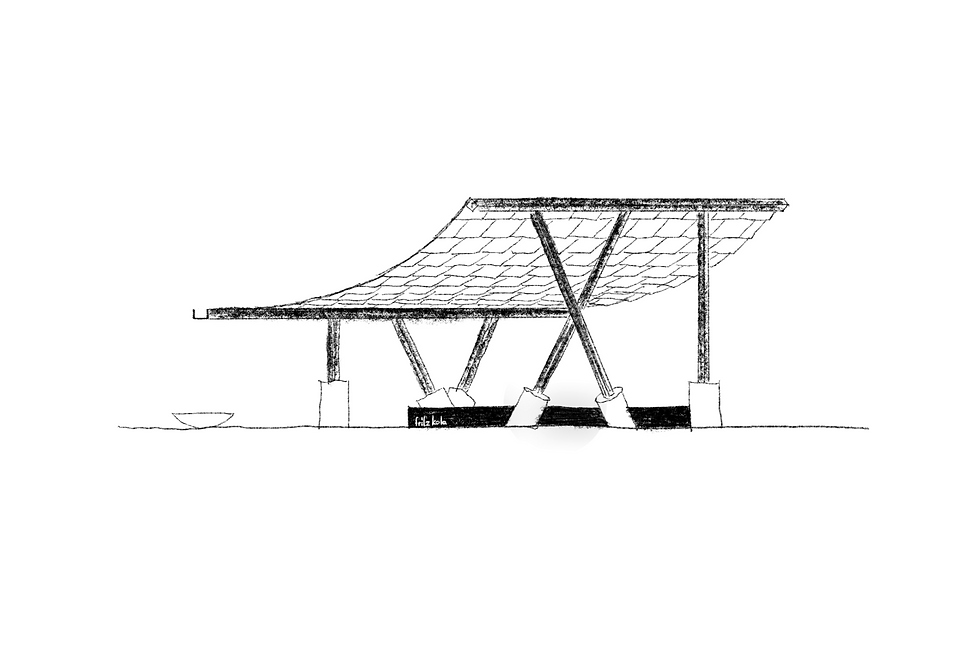
The roof is carried by a simple wooden construction, preferably assembled from recycled timber. Reused precast concrete elements form the feet of the structure, lifting the wood off the ground and protecting it from moisture while giving the pavilion a sense of groundedness. This combination of reused materials emphasizes longevity through reuse rather than permanence through mass.
Above this supporting structure, the roof itself becomes the central architectural figure. It is composed of overlapping metal shingles, stapled together to form a suspended load-bearing surface. Read simultaneously as armor and as sail, the roof appears both protective and mobile. It is a surface shaped by gravity, tension, and light – maybe even sound when the wind starts to move it. The shingle construction reflects the fire below as well as surrounding light sources, amplifying their presence and scattering flickering reflections across the space. At the same time, the roof guides smoke upward, allowing it to trace the geometry of the structure before
dissipating into the night sky. The material of the shingles may vary depending on availability; while metal is preferred for its reflectivity and durability, painted wooden shingles are equally conceivable. The final material choice is intended to be discussed and decided in dialogue with the operators. Regardless of material, the structure is designed for clean separation and residue-free dismantling, allowing all components to be reused after the festival. Rainwater is collected along the roof surface and directed into a basin beneath, that mirrors the fire bowl. The collected water plays a crucial role at the end of each event. In a shared ritual, the fire is extinguished using the gathered water, marking the conclusion of the night. As the water meets the embers, smoke rises dramatically along the roof surface, making the act visible from afar and transforming the moment of closure into a collective gesture rather than a technical necessity.
The existing seating is deliberately retained as we see no reason to destroy what previously shaped the identity of a place. Though painting it, integrates it into the overall concept and provides a surface for the CI of Fritz Kola. Fire, reflection, water, smoke and collective gathering thus form the core elements of the project – an architecture not of spectacle, but of shared experience during the day, the night and the ritualized ending of each evening.